

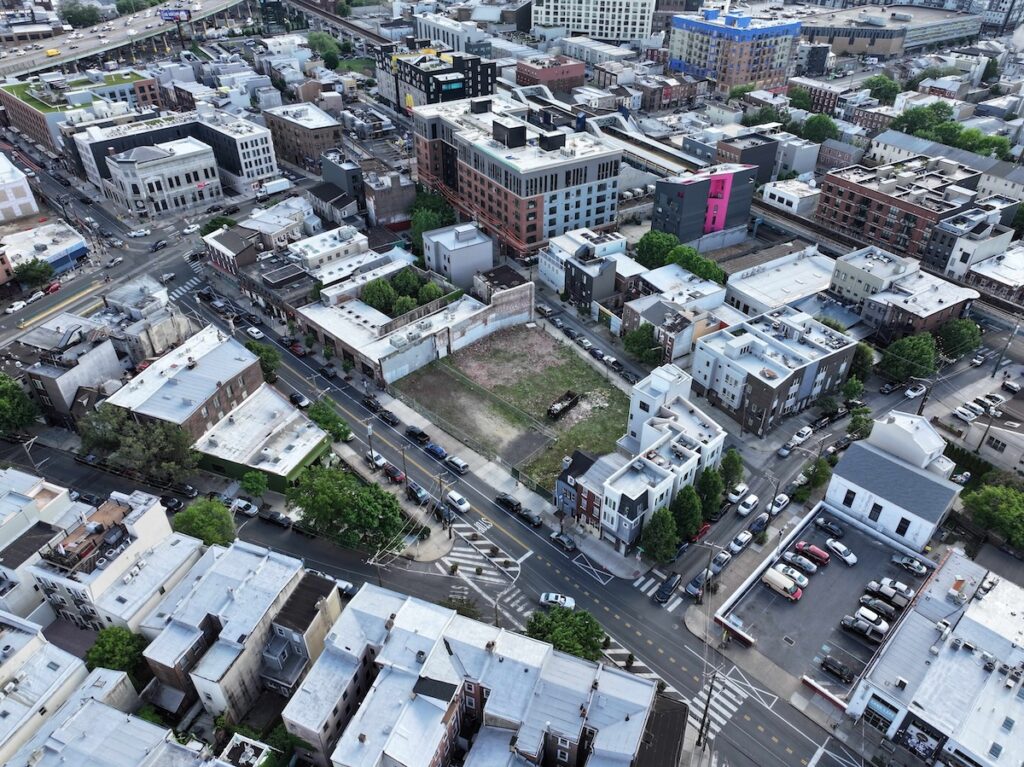
Philadelphia needs more housing.
It also has roughly 40,000 vacant lots.
At first glance, those two realities are difficult to reconcile. If the demand for housing exists and the land exists, why aren’t we simply building more homes?
The more I’ve worked in this market and listened to different perspectives on housing development, the more I’ve realized that the answer depends, in part, on whom you ask.
It reminds me of the old analogy of several people describing an elephant from different sides. Each person is describing something real, but depending on where they’re standing, they experience a very different part of the whole.
Housing can feel much the same.
Ask a developer what’s preventing more housing from being built, and you may hear about rising construction costs, interest rates and projects that simply no longer pencil.
For smaller developers, access to flexible capital can create an additional hurdle.
Ask an affordable housing developer, and the conversation may turn to the gap between what a project costs to build and what affordable rents or home prices can support.
Ask someone trying to move a project through the development process, and you may hear about zoning, permitting, variances, delays and uncertainty.
None of them are wrong.
They’re encountering different barriers along the same path from land to housing.
And sometimes, the barrier occurs even earlier.
Before You Can Develop the Land, Can You Acquire It?
This is the part of the housing equation we see most often at Seek.
Before a developer can ask what can be built, how much construction will cost or whether the project can be financed, there is sometimes a much more fundamental question:
Can the property actually be acquired?
A parcel can sit vacant for decades. It can appear on a map as an obvious development opportunity. There may even be a developer willing to purchase it.
But the person listed on the deed may have died 40 years ago.
Perhaps the estate was never probated. The original owner’s children may have since died as well. Ownership may now run through multiple generations of descendants living in different states, some of whom may not know one another or even know they have an interest in the property.
The land is physically there.
The demand may be there.
The developer may be there.
But the property still cannot readily enter the development pipeline.
That distinction has become increasingly important to me:
Vacant land and development-ready land are not the same thing.
Philadelphia Shows the Scale of the Challenge.
In Philadelphia, that distinction matters.
The city has roughly 40,000 vacant lots, and approximately three-quarters of them are privately owned.
Philadelphia also has a well-documented ownership problem.
A 2021 Pew Charitable Trusts analysis identified at least 10,407 residential properties with tangled titles where an apparent owner’s legal claim to the property is not reflected in official records. Together, those properties represented more than $1.1 billion in assessed value.
Further research is needed to determine how many of Philadelphia’s privately owned vacant lots are affected by tangled title or other ownership issues. But in our work, we see firsthand how unresolved ownership can keep properties from entering the development pipeline.
A city can have a tremendous amount of vacant land without having an equivalent amount of land readily available for development.
And ownership is only one reason why.
Clearing One Barrier Reveals the Next
Suppose the ownership issue is resolved.
Now the developer can acquire the property.
But that doesn’t mean a home gets built.
The next question may be zoning. Or permitting. Or financing. Or whether construction costs allow the project to make economic sense at all.
This is where I’ve come to see housing production less as a single problem and more as a series of gates:
Can the property be acquired?
Can the intended use be approved?
Can the necessary capital be assembled?
Does the project make economic sense?
A project can stop at any one of them.
Removing one barrier doesn’t guarantee that housing gets built. It simply gives the project the opportunity to reach the next milestone.
Why Collaboration Matters
This is also why I find Philadelphia’s current approach to housing interesting.
Mayor Cherelle Parker’s H.O.M.E. initiative represents a planned $2 billion investment aimed at creating and preserving 30,000 homes across different levels of affordability. But what’s notable isn’t only the size of the investment.
It’s the range of barriers the broader effort is trying to address.
Philadelphia is investing in housing production and preservation, financing programs, land acquisition and development-process reform. At the same time, the City has been working through its H.O.M.E. Optimization Project to reduce the time, cost and uncertainty associated with housing approvals.
In other words, the response itself reflects the nature of the problem:
There isn’t one lever to pull.
Developers need projects that make economic sense. Small developers need access to appropriate capital. Affordable housing often requires additional financial support. Cities need development processes that are predictable enough for projects to move forward. And vacant properties have to become properties that someone can actually acquire and develop.
No single participant controls all of those things.
In some cases, ownership sits at the beginning of that chain. Until the land can legally move, the questions of financing, permitting and construction remain downstream.
The developer focused on construction costs isn’t wrong. The affordable housing developer focused on financing isn’t wrong. The city focused on permitting isn’t wrong. And those of us working to resolve ownership aren’t seeing a separate problem.
We’re seeing different parts of the same one.
Meaningful progress requires those parts of the ecosystem to work together.
No single participant holds the entire solution. But each may hold the ability to remove the barrier directly in front of them.
And perhaps that’s how more vacant land ultimately becomes what cities like Philadelphia actually need:
housing.

