

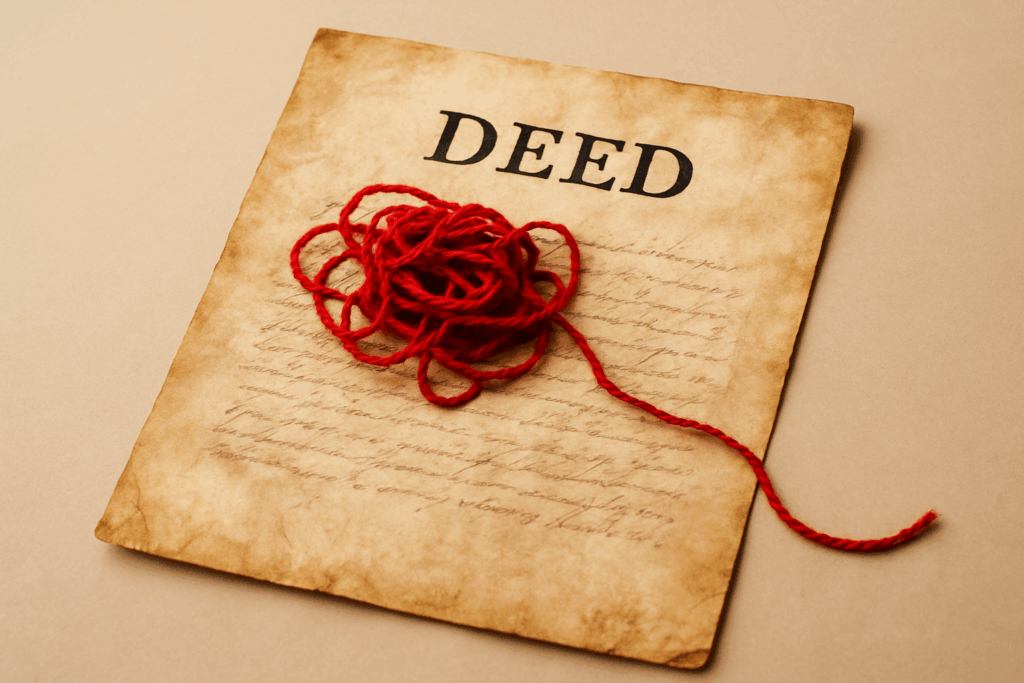
At first glance, a house may look lived in and fully owned — but on paper, it could be a completely different story.
In cities across the country, thousands of properties are caught in what’s known as a “tangled title.” These are homes where the name on the deed doesn’t match the person who actually lives there — often because someone passed away without a will, or ownership was never legally transferred after a death.
It might not seem urgent — until it is. A tangled title can quietly derail everything from home repairs and insurance to property sales and estate transfers. And far too often, families don’t realize there’s a problem until it’s too late.
What Exactly Is a Tangled Title?
A tangled title happens when the legal ownership of a property is unclear or hasn’t been properly recorded. Some common causes:
- A homeowner dies without a will, and no one legally claims the property.
- Heirs move into the property but never formally update the deed.
- Generations pass without probate or title transfer.
As a result, the home stays in the deceased relative’s name, leaving the current occupant with no legal standing — even if they’ve paid taxes and maintained the property for years.
Why It’s a Bigger Problem Than People Realize
It’s easy to assume that if you live in the home, pay the bills, and take care of it, you’re the owner. But if your name isn’t on the deed, you can’t:
- Take out a home equity loan
- Legally sell or transfer the property
- Access insurance or disaster relief
- Qualify for home repair grants
- Protect the home from deed fraud or disputes
- Use the property as a financial asset
That means a tangled title isn’t just a legal technicality — it’s a barrier to opportunity, stability, and generational wealth.
How Tangled Titles Happen — and Why They’re So Common
In many cases, tangled titles aren’t the result of neglect — they’re the result of complexity.
People pass away without wills. Probate can take months or even years, and it often comes with legal costs that families can’t easily afford. Relatives move in informally. Legal documents get lost, delayed, or never filed at all. And for families already overwhelmed, title issues can slip under the radar — until a crisis brings them to the surface.
In cities like Philadelphia, more than 10,000 homes are estimated to have tangled titles. That’s over 10,000 families at risk of losing property they believed was their
How You Can Protect Yourself and Your Family
If you think you — or someone you know — may be living in a property with a tangled title, here are a few steps you can take right now:
- Check the deed. If the property is still in the name of a deceased person and no legal transfer has taken place, the title may be tangled.
- Pay attention to official mail. Letters from the city or courts could be an early warning sign of title or tax issues. Don’t ignore them.
- Set up a deed alert system. Many counties offer free services that notify you when documents are filed under your name or property — it’s one of the easiest ways to catch unauthorized activity.
Why It Matters
A tangled title can sit quietly for years — until it becomes a roadblock to refinancing, repairs, or even staying in the home.
It can delay progress, stall development, and quietly erode the value of what a family thought they owned.
But the sooner it’s addressed, the more options exist — for heirs, for families, and for the communities around them.
Clear title doesn’t just unlock property. It unlocks opportunity.

